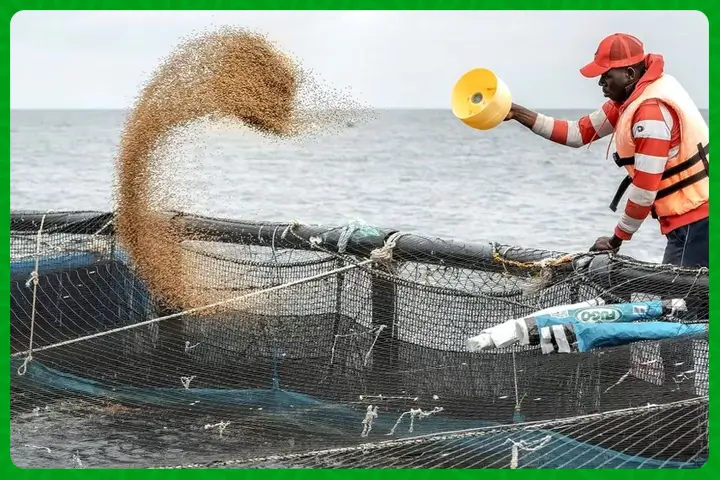
Zimbabwe has quietly taken an important step toward strengthening its food security with the opening of a new fish hatchery near Bulawayo. Built on land belonging to the Matopos Research Institute and developed in partnership with the Food and Agriculture Organization, the new facility aims to make quality fingerlings more widely available and to expand the country’s aquaculture footprint.
The headline numbers matter. The hatchery can produce up to 2.7 million fry annually and is already operating at roughly 75 percent of that capacity. That means thousands of fish farmers who once struggled to access reliable fingerlings will soon have a much easier supply. Officials see the hatchery as a practical response to a persistent gap: aquaculture currently supplies only about 16 percent of the nation’s fish, while domestic demand is estimated at 60,000 tonnes a year.
A clear national target
Zimbabwe’s national development plan, adopted in May 2025, sets an ambitious tilapia target: increase production from 4,942 tonnes in 2024 to 14,000 tonnes by 2032. The new hatchery is a concrete contribution to that goal. Milton Makumbe, director of the Fisheries and Aquaculture Resources Department, laid out the technical capacity and the objective of getting more quality fingerlings into the hands of both small-scale and commercial producers.
Permanent Secretary Obert Jiri framed the hatchery as a logistics and access solution that should speed up growth across the sector. In plain terms, when fingerlings are more available and affordable, farmers can expand cycles, scale production, and plan with greater confidence. That creates a virtuous circle of supply, processing and market development.
Why this matters for Zimbabwe
Right now inland fisheries supply most of the country’s fish, and imports fill the rest of the gap between domestic output and consumption. Improving hatchery capacity tackles the challenge at its root by raising the supply of young fish capable of growing out into marketable sizes. For rural communities, that can mean more consistent incomes. For urban consumers, it can mean more regular access to affordable local fish.
The hatchery will initially serve communities around Bulawayo, but authorities plan to expand distribution as output stabilizes. Officials are clear that the facility is not a silver bullet. Experts point out that broader sector growth will depend on complementary investments in cold chain facilities, processing plants, training for farmers, and access to finance.
Poultry-style planning applied to fish production
One of the most useful features of a modern hatchery is predictability. Unlike relying on seasonal catches from inland fisheries, a hatchery allows for planned production cycles and better quality control. That predictability helps processors and retailers commit to purchase agreements and encourages smallholder farmers to invest in ponds, feed and better husbandry.
The new facility is also a hub for technical support. Authorities have highlighted plans to combine fingerling distribution with training programs that teach best practices in pond management, feed optimization and disease prevention. Those capacity-building activities will be essential if the hatchery is to translate production into sustained growth at the farm level.
Challenges ahead
Several obstacles remain. Expanding aquaculture beyond the initial region will require additional hatcheries, investment in transport and cold storage, and greater private sector participation in processing and marketing. There is also the question of finance. Farmers need affordable credit to buy feed, build ponds and scale operations. Finally, environmental management must be front and center to minimize risks associated with intensification, including water use and disease management.
A long view for food security
The hatchery near Bulawayo represents a pragmatic, demand-driven approach to increasing domestic fish production. It aligns with national targets, provides a tangible resource for farmers and signals a more modern, planned approach to feeding Zimbabwe. If complementary investments follow and distribution systems are strengthened, the hatchery could help reduce import dependence and make locally grown fish a more reliable part of Zimbabwean diets.
For now, authorities are monitoring the facility closely to make sure it hits production targets and that fingerlings reach the farmers who need them most. Over the next decade, the real measure of success will be whether this single hatchery becomes the spark for a broader aquaculture ecosystem that can close Zimbabwe’s fish supply gap.
Stay updated with the latest farming tips and agriculture industry news from Africa by subscribing to our newsletter. Don’t miss out on valuable insights and updates. Follow us on Twitter, LinkedIn, and Facebook to join our farming community and stay connected with us.