
Christopher Burke
Senior Advisor, WMC Africa
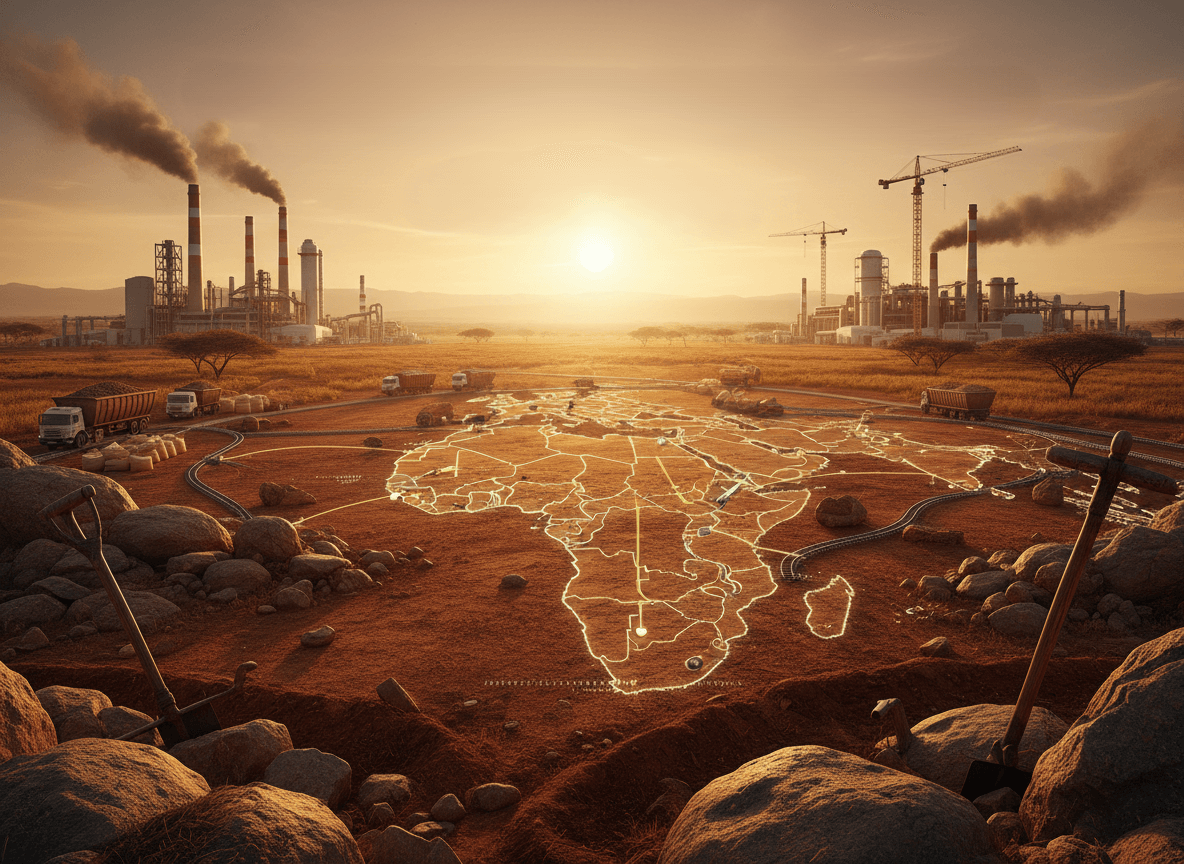
While global agricultural discourse often prioritizes high-tech seeds and mechanical automation, the true engine of geopolitical stability is a three-letter chemical acronym: NPK (Nitrogen, Phosphorus and Potassium). To understand the stakes for the African continent, it is necessary to look past the emerald hues of the landscape and into the volatile mechanics of the global fertilizer trade. Since 2022, global fertilizer markets have been tighter and more volatile with demand for soil nutrients outstripping supply. This is not simply a market fluctuation for Africa, but a direct challenge to the bedrock of the continent’s food security.
The Geography of Power: Who Controls the Flow?
Estimates for the value of the global fertiliser market in 2025 vary sharply ranging from US$188 billion to US$402.5 billion. The spread largely reflects differences in what is being counted, for example whether figures cover nutrients only or include wider crop-input products and whether values are measured at factory gate or at retail. Even with these definitional differences, most forecasts still point to steady growth, commonly in the range of 3.0 to 6.0 percent Compound Annual Growth Rate (CAGR). Prices, remain highly exposed to policy shifts and trade restrictions in major producing countries including China and Russia.
The global fertilizer market functions as a high-stakes arena controlled by a handful of dominant nutrient producers. Their geopolitical dominance is dictated by access to specific geological deposits and affordable energy. Nitrogen production, essentially packaged natural gas, positions major energy hubs including China, Russia, the United States and India as the primary architects of the global nitrogen supply chain.
Morocco holds approximately 70 percent of the world’s known phosphate reserves and Canada has the largest known potash reserves accounting for 33 percent of global production. While the giants dictate the terms of trade, the shockwaves are felt most acutely at the farm gate in rural African markets when geopolitical tensions rise or energy prices spike.
What is emerging in the global fertilizer system is not simply market volatility, but a structural form of governance. Access to nitrogen, phosphate and potash is increasingly mediated through financial, logistical and trade infrastructures that operate beyond formal treaty frameworks. When export restrictions are imposed in Beijing, sanctions tighten in Moscow or energy prices spike in Europe; African farmers do not experience a diplomatic dispute–they experience exclusion from essential nutrient flows.
In practical terms, participation in global agriculture is conditioned not by multilateral law, but by control over production nodes, transport corridors and capital-intensive input systems. This reflects a broader pattern in the global political economy. Authority increasingly resides in the ability to regulate access to material systems rather than in the issuance of formal legal commands.
Consumption Gap and “Soil Mining” Crisis
The disparity in fertilizer application remains the most staggering metric of global agricultural inequality. According to the World Bank, the world average for the application of fertilizer sits at 134.2 kg per hectare (kg/ha) in 2022 while the application of fertilizer for intensive agricultural commodity producers in East Asia and the Pacific was 290.8kg/ha. In comparison, the application of fertilizer in Sub-Saharan Africa averaged roughly 18.2 kg/ha that same year with Uganda registering 3.3 kg/ha in 2023.The under-use of fertilizer is a core driver of soil mining–a destructive process where nutrients are extracted by crops and never replaced, slowly hollowing out the earth’s productive capacity.
This extraction is particularly dangerous in tropical ecosystems where the fertile topsoil is often a fragile layer less than 30 centimetres deep. Without replenishment, this layer is quickly exhausted, eventually exposing the murram or laterite sub-strata beneath. Once these iron-rich layers are stripped of their organic cover and heated by the tropical sun, they undergo an irreversible chemical transformation into a hard, brick-like pavement that is virtually impossible to farm. This is not just a loss of yield, but the permanent sterilization of the land.
Barriers to Entry: Quality and Logistics
Agriculture in Africa faces a broad range of challenges that extend far beyond simple resource availability. Logistical constraints widen the disparity in fertilizer access. For landlocked African farmers, the price of a bag of urea can be exponentially higher than the market price in coastal areas, driven up by crumbling infrastructure, excessive bureaucracy and high transportation costs. Beyond these economic barriers, a profound lack of technical knowledge and the mismanagement of inputs further complicate the situation.
The market also faces challenges concerning the quality of fertilizers with regular reports of fake or substandard products on the African retail market. These products are often either diluted with lime or have lost their nitrogen potency due to improper storage in extreme heat. This widespread adulteration breeds deep mistrust among smallholders, who no longer view fertilizer as a guaranteed yield-booster, but a risky financial gamble that often fails to return their investment.
The ISFM Doctrine: Bridging the Organic-Inorganic Divide
The debate between organic and inorganic fertilizers is often presented as a binary choice, but for the African “Green Revolution” to succeed, a middle path specifically adapted to local conditions is required. This is the core of Integrated Soil Fertility Management (ISFM). Championed by organizations including the Consultative Group on International Agricultural Research (CGIAR), Climate Change, Agriculture and Food Security (CCAFS), Alliance for a Green Revolution in Africa (AGRA) andInternational Institute of Tropical Agriculture (IITA), the ISFM approach posits inorganic fertilizers provide the “food” for the crop while organic matter provides the “house” comprising the soil structure and microbial life that allow plants to actually absorb those nutrients. Relying on chemicals in carbon-depleted soil is inefficient and causes leaching while dependence on bulky organic compost is often insufficient to meet the caloric demands of a surging population.
Continental Autonomy: A New Industrial Era
Africa is gradually shifting from a passive importer of fertilizer to a strategic producer. Nigeria’s Dangote Fertiliser Plant utilizes domestic natural gas and has a current capacity to produce 3 million tonnes annually with plans to expand to 5-7 million tonnes. This expansion is turning Nigeria into a net urea exporter and shielding West Africa from external price shocks and supply chain disruptions.
Morocco’s state-owned OCP Group has solidified its role as the continent’s leading phosphate supplier. Moving beyond the export of raw rock, OCP has pioneered a customized fertilizer strategy. The approach rejects one-size-fits-all NPK blends in favour of specialized formulas tailored to the unique micronutrient deficiencies of specific African soil profiles. OCP has to date mapped over 50 million hectares of African soil and has committed over US$13 billion in investments by 2030 to develop local fertilizer plants and blending facilities in countries including Ethiopia, Nigeria, Ghana and Rwanda where it will train 30,000 farmers.
The renewed commitment to soil health was a key focus in the new 10-year continental strategy and action plan for agrifood systems adopted by the African Union member states following the 2025 Extraordinary Summit on the Comprehensive Africa Agriculture Development Programme (CAADP) held in Kampala, Uganda.
Call for Radical Soil Stewardship
The mandate for the next decade is clear. Africa must move beyond the era of extractive agriculture. The longstanding reliance on the natural fertility of regional lands is a debt that has come due. The continent must leverage the industrial strength of regional titans such as Dangote and the targeted fertilizer partnerships of Morocco’s OCP to ensure that nutrient inputs are affordable and high-quality.
Industrialization is only half the battle. Policymakers must institutionalize the principles of ISFM at local levels to ensure that every bag of synthetic NPK is matched by a commitment to carbon sequestration and organic restoration. If stakeholders continue to treat the soil as a bottomless mine rather than a living biological asset, they are not just risking a harvest; they are forfeiting the future habitability of Africa’s most productive regions. The long-term viability of the state is fundamentally predicated on soil health, as agricultural degradation directly undermines the economic and biological foundations necessary for sovereign stability.
END
Christopher Burke is a senior advisor at WMC Africa, a communications and advisory agency located in Kampala, Uganda. With over 30 years of experience, he has worked extensively on social, political and economic development issues focused on governance, agriculture, environment issues, policy formulation, communications, advocacy, extractives, conflict transformation, international relations and peace-building in Asia and Africa.
Stay updated with the latest farming tips and agriculture industry news from Africa by subscribing to our newsletter. Don’t miss out on valuable insights and updates. Follow us on Twitter, LinkedIn, and Facebook to join our farming community and stay connected with us.