Ghana is making a clear statement about its food future.
Instead of accepting the status quo of imported chicken and persistent fish supply gaps, the country is now pushing two major initiatives that could reshape domestic protein production for years to come: a national poultry master plan designed to revive local chicken farming, and an ambitious marine aquaculture project that signals a new chapter for fish production.
Together, these moves point to a single national priority: produce more at home, create jobs locally, and keep more value inside Ghana’s economy.
A national poultry master plan with one big goal: reduce import dependence
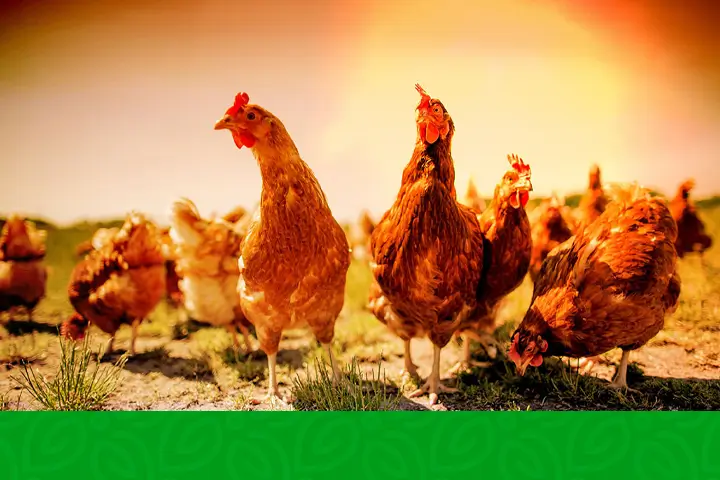
Ghana is developing a national master plan aimed at revitalising its poultry sector and reducing the country’s heavy reliance on imported chicken.
The Ministry of Agriculture has appointed a consultant to steer the process in collaboration with Agri-Impact Limited and the Mastercard Foundation. Officials say the strategy will provide a structured framework to raise production, strengthen competitiveness, attract investment, and generate employment across the poultry value chain.
It is a long-overdue effort in a country where demand has outgrown domestic supply for years.
Ghana is the largest poultry meat market in West Africa, yet roughly 80% of domestic demand is currently met through imports. That is a staggering figure when you consider the local appetite for chicken and the potential for poultry to support farmers, feed millers, processors, transporters, and retailers.
According to the U.S. Department of Agriculture, local chicken meat production reached 60,000 tonnes in 2023, compared with consumption of 330,000 tonnes. That gap is not just a market imbalance. It represents missed income, lost jobs, and a weakened local supply chain.
Why local poultry has struggled to keep up
Ghana’s poultry industry is not short of farmers. It is short of an ecosystem that consistently supports profitable production.
Industry representatives point to a familiar set of bottlenecks:
High feed costs remain the single most punishing constraint. Feed typically accounts for the largest share of poultry production expenses, and when maize or soy prices rise, farmers feel it immediately.
Shortages of day-old chicks also limit expansion. When hatchery capacity is weak or inconsistent, farmers cannot plan confidently, and production cycles become unstable.
Infrastructure gaps are equally damaging. Inadequate hatcheries, feed mills, processing plants, and cold storage mean farmers often operate without the support systems that allow poultry industries elsewhere to scale efficiently.
The result is an uneven playing field where imported chicken, often backed by large-scale industrial systems and global supply chains, lands on Ghanaian shelves at prices local producers struggle to match.
A plan built around Ghana’s real production zones
One of the most practical features of the new poultry master plan is that it will be built through consultations across Ghana’s major production belts.
The plan is expected to be completed in 2026 after stakeholder engagement in the northern, middle belt, and southern zones. That matters because poultry production is not uniform across the country. Feed availability, climate conditions, market access, and farm size vary widely.
A plan that ignores those differences becomes a document on a shelf. A plan that reflects them can become a working blueprint for investment and growth.
Poultry Farm to the Table Programme: the first push already underway
Even before the master plan is completed, the government has already begun laying groundwork.
In February 2025, Ghana introduced the Poultry Farm to the Table Programme. The initiative aims to expand farmers’ access to credit, affordable feed, training, and improved broiler breeds.
This is significant because poultry farmers rarely fail due to lack of effort. They fail because they cannot access the tools and inputs needed to compete.
Affordable financing helps farmers scale up and stabilise cash flow. Better feed access lowers the cost base. Training reduces losses from disease and poor management. Improved breeds increase growth performance and feed conversion, which directly affects profitability.
If this programme is implemented consistently, it could become the bridge between today’s struggling production and tomorrow’s expanded local supply.
The bigger economic prize: jobs across the poultry value chain
The poultry master plan is not only about producing more chicken. It is about building an industry.
A thriving poultry sector creates jobs far beyond the farm gate. It drives demand for maize and soy farmers. It supports hatchery technicians, feed mill workers, veterinary services, transport and logistics, slaughter and processing labour, cold chain operators, and retail distribution.
For a country looking to create employment and strengthen agribusiness, poultry is one of the fastest pathways to broad-based economic impact.
Ghana’s marine aquaculture project: a bold new direction for fish production
While poultry is getting a national blueprint, Ghana is also making moves in another high-demand protein category: fish.
Alongside poultry reforms, the country is advancing plans to diversify fish production through offshore aquaculture.
Flosell Limited has begun discussions with the Ministry of Fisheries and Aquaculture Development to establish what is described as Ghana’s first commercial marine fish farming operation.
The initiative will use floating circular cages and hatcheries in marine waters, supported by Norwegian technical partners.
This is not a small pilot. It is a sign that Ghana is beginning to treat aquaculture as a strategic industry, not just a supplementary activity.
Why marine aquaculture matters for Ghana
Ghana’s fish demand remains high and persistent.
Annual per capita fish consumption is estimated at 24.6 kilograms, and the country continues to face a significant shortfall in meeting domestic demand. Even with rising aquaculture output, supply has not caught up.
Official data show aquaculture output rose from 52,360 tonnes in 2019 to 100,000 tonnes in 2023. That is strong growth, but it still represents only about 20% of total fish supply.
Most aquaculture in Ghana is concentrated in freshwater systems, especially cage farming on Lake Volta and pond operations. Marine aquaculture expands the production map.
It reduces pressure on inland resources. It creates new production zones closer to coastal markets. And it introduces a new class of investment, technology, and skills into the sector.
What the project timeline reveals
The marine aquaculture project is structured with clear milestones.
Site installation is scheduled for the second quarter of 2026, with the first harvest anticipated in the final quarter of 2027.
The first phase will involve 10 marine concessions, beginning in Prampram in the Greater Accra Region.
That timeline suggests a serious build-out, not a symbolic launch. Marine aquaculture requires strong planning, from site selection and cage installation to hatchery operations, feed supply, biosecurity, and harvest logistics.
It is a capital-intensive model, but it can deliver high-volume production if executed well.
A smart complement to Lake Volta, not a replacement
The most strategic part of Ghana’s marine aquaculture plan is that it is designed to complement existing systems, not compete with them.
Freshwater cage farming and ponds have already proven their value. Marine aquaculture adds a second engine.
It expands production without overloading Lake Volta. It diversifies risk across different water environments. And it gives Ghana more flexibility in meeting national fish demand.
Over time, it could also open export possibilities if processing and quality systems mature.
The shared message behind poultry and marine fish reforms
These two initiatives, though different in design, share the same underlying message.
Ghana wants more control over its food supply.
Chicken imports dominate the poultry market. Fish supply continues to lag behind consumption. Both challenges drain foreign exchange and weaken domestic value chains.
A national poultry master plan and a first commercial marine fish farming operation represent something bigger than sector reforms. They represent a national shift toward production-driven food security.
What success will require
Ghana’s ambition is clear. But ambition alone will not deliver results.
To make the poultry master plan work, the country will need consistent implementation, strong coordination, and practical investments in feed systems, hatcheries, processing, and cold storage.
To make marine aquaculture succeed, Ghana will need strong regulation, environmental safeguards, technical capacity, and a reliable supply chain for inputs like feed and fingerlings.
Both sectors will also require one thing that often decides outcomes in agriculture: trust. Farmers and investors must believe policies will remain stable enough for long-term planning.
The bottom line
Ghana is positioning itself for a more self-reliant food future.
If the poultry master plan delivers meaningful structural change and marine aquaculture takes root as planned, the country could reduce import dependence, create thousands of jobs, and build stronger domestic protein industries.
This is not just about chicken and fish. It is about economic resilience, national confidence, and feeding Ghana with systems built in Ghana.
Stay updated with the latest farming tips and agriculture industry news from Africa by subscribing to our newsletter. Don’t miss out on valuable insights and updates. Follow us on Twitter, LinkedIn, and Facebook to join our farming community and stay connected with us.