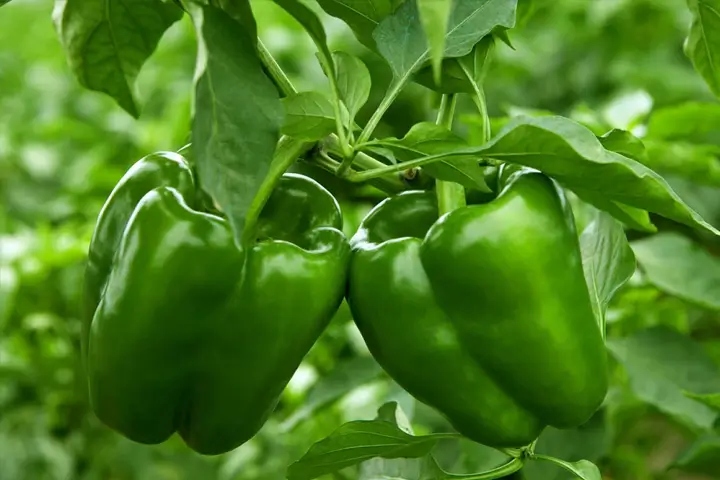
Morocco is quietly rewriting the rules of fresh produce trade in the United Kingdom. In 2025, the country doubled its sweet pepper exports to the UK, reaching 8,100 tonnes and setting a new bilateral record. What looks like a strong seasonal performance is in fact part of a much bigger story, one that signals a shift in how the UK sources its fresh vegetables.
For importers, retailers, and investors, Morocco is no longer just an emerging supplier. It is becoming a serious contender in one of Europe’s most competitive food markets.
A surge that signals long-term change
The scale of Morocco’s growth is hard to ignore. Since 2020, sweet pepper shipments to the UK have expanded 35-fold, with an average annual growth rate of 104 percent. This is not incremental growth. It is transformation.
Such rapid expansion points to more than rising demand. It reflects a strategic repositioning of Morocco within global supply chains, backed by improved logistics, competitive pricing, and a clear understanding of market timing.
The UK, which depends heavily on imports for fresh vegetables, is responding. Buyers are increasingly diversifying away from traditional suppliers and looking toward partners who can deliver consistency, value, and reliability.
Competing with Europe’s biggest suppliers
Despite Morocco’s rise, the UK sweet pepper market is still dominated by European heavyweights. The Netherlands and Spain together accounted for 83 percent of total imports in 2025.
But that dominance is beginning to show cracks.
While Spain, France, and Germany all saw export volumes decline in 2025, Morocco moved in the opposite direction. It expanded its footprint, capturing a larger share of the market at a time when competitors were losing ground.
By the end of the year, Morocco’s share of UK sweet pepper imports had climbed to 3.65 percent, up from 1.7 percent in 2024. That leap allowed it to overtake France and nearly match Germany, securing fourth place among suppliers.
Winning the winter supply window
Morocco’s biggest advantage lies in timing. The country has positioned itself perfectly within the November to April window, when UK demand for fresh produce remains strong but European production slows.
This seasonal edge is critical. Retailers need reliable supply during winter months, and Morocco is stepping in to fill that gap with consistent volumes and competitive pricing.
Geography also plays a role. Morocco’s proximity to Europe allows for faster shipping times compared to more distant suppliers. At the same time, its trade routes have remained relatively stable, avoiding disruptions that have affected other global supply chains.
Cost efficiency meets logistical strength
Morocco’s competitive edge is not just about timing. It is also about economics.
Lower labour and production costs compared to countries like Spain and the Netherlands allow Moroccan exporters to offer attractive pricing without compromising quality. Combined with efficient logistics and growing investment in infrastructure, this creates a powerful value proposition for UK buyers.
These advantages are not accidental. They are the result of deliberate efforts to build a resilient and export-focused agricultural system.
From berries to vegetables, a diversified export strategy
Morocco’s success in sweet peppers builds on an already strong foundation. The country has established itself as a leading supplier of blueberries and raspberries to the UK, dominating the berry segment in recent years.
What is now becoming clear is that this success is not limited to one category. The same logistics networks, cold chain systems, and export expertise that powered the berry boom are now being applied to vegetables.
This cross-category strength is important. It shows that Morocco is not relying on a single commodity. It is building a diversified fresh produce export platform capable of competing across multiple segments.
Investment opportunities gaining momentum
For investors, Morocco’s rise presents a range of opportunities across the agricultural value chain.
Cold storage facilities near key ports are becoming increasingly important as export volumes grow. Greenhouse expansion offers a way to extend production seasons and meet winter demand more effectively. Packhouse modernization ensures that products meet the quality and safety standards required by UK retailers.
These are not short-term plays. They are long-term investments in infrastructure that can support sustained export growth.
The winter supply advantage also adds a layer of predictability. Investors backing greenhouse operations can tap into a reliable revenue stream during months when European production is limited.
Reshaping the UK’s import landscape
Morocco’s rapid growth is beginning to reshape how the UK sources its fresh produce. As the country continues to expand its presence, reliance on traditional European suppliers could gradually decline.
This does not mean established exporters will disappear. But it does mean the market is becoming more competitive, with buyers increasingly open to new sourcing strategies.
For Morocco, this is a moment of opportunity. With strong momentum, proven competitiveness, and growing market share, the country is well positioned to become a key partner in the UK’s fresh produce supply chain.
A blueprint for sustained export success
Morocco’s trajectory offers valuable lessons for the global food industry. Strategic investment in logistics, consistent quality, and the ability to supply during off-peak seasons can unlock access to premium markets.
The doubling of sweet pepper exports is not just a headline figure. It is evidence of a system that is working, one that connects farms to international shelves with efficiency and reliability.
As demand for fresh produce continues to grow, Morocco’s model shows what is possible when timing, infrastructure, and market strategy align.
Stay updated with the latest farming tips and agriculture industry news from Africa by subscribing to our newsletter. Don’t miss out on valuable insights and updates. Follow us on Twitter, LinkedIn, and Facebook to join our farming community and stay connected with us.