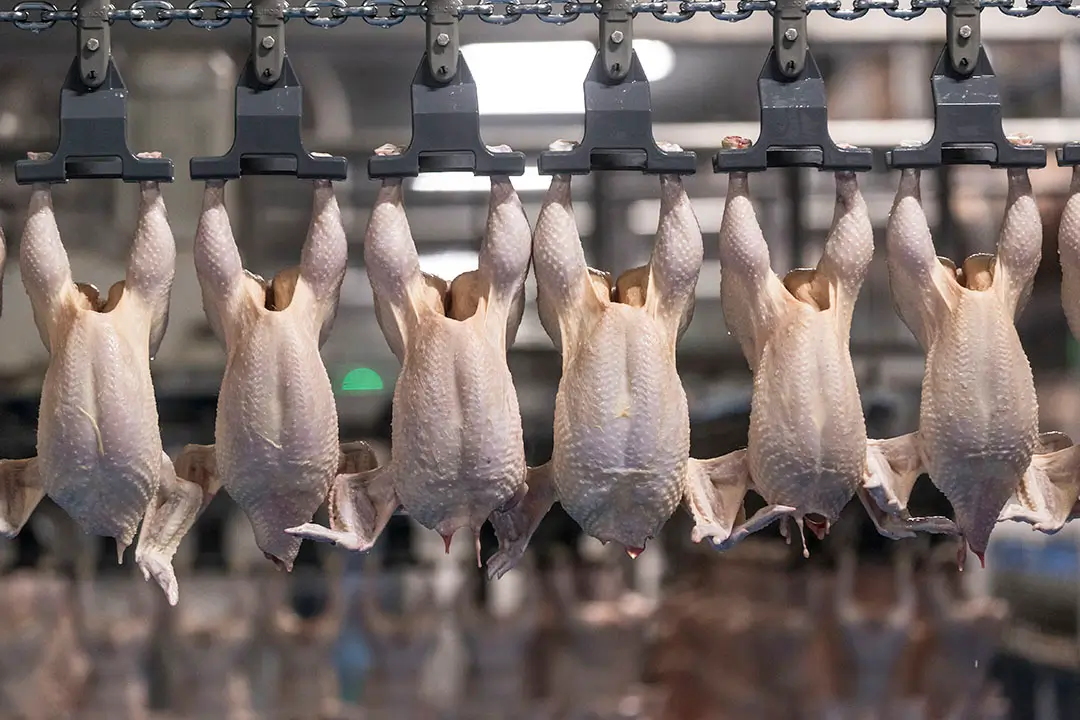
As Ramadan approaches, Egyptian households are feeling a familiar squeeze at the market counter. Poultry prices have climbed sharply through February, reflecting a seasonal rise in demand as families prepare for one of the busiest food periods of the year.
For many Egyptians, chicken is not a luxury. It is the everyday protein that anchors home cooking, feeds large families, and stretches budgets in a way red meat often cannot. So when poultry prices move, the impact is immediate and widely felt.
Officials have described the price surge as temporary and seasonal, driven more by consumption patterns than by supply shortages. Still, the numbers tell a story of tightening affordability, regional price gaps, and a government racing to cool the market before the Ramadan rush peaks.
Ramadan demand is pushing poultry prices higher
February is typically a build-up month for poultry consumption in Egypt. Demand rises as households stock up and food businesses prepare for increased activity. That demand is now showing clearly in retail prices.
Fresh baladi chicken, widely preferred for its taste and texture, climbed from roughly US$2.20 per kilogram in December 2025 to about US$2.40 by mid-February 2026. This marks the highest level in nearly 10 months, a notable jump for a product that many families buy weekly.
Fresh white poultry also rose significantly, moving from approximately US$1.45 per kilogram in December to around US$1.80 by mid-February.
This upward movement across both categories suggests the pressure is broad-based. It is not limited to one niche market. It is spreading across the poultry basket that consumers rely on most.
The regional price gaps are widening
One of the most striking features of Egypt’s poultry market right now is how uneven prices are across governorates.
For fresh baladi chicken, Beheira recorded average prices of about US$2.75 per kilogram, followed by Ismailia and Sharqia at around US$2.70. At the other end, New Valley posted the lowest levels at roughly US$1.65.
Fresh white chicken also showed wide variation. Prices exceeded about US$2 per kilogram in Damietta, Beheira, and Dakahlia, while New Valley again recorded the lowest price at roughly US$1.35.
Frozen poultry has followed the same pattern. Prices increased from approximately US$2.45 per kilogram in December to about US$2.55 by mid-February. Matrouh reported peaks above US$3.80, while New Valley remained the least expensive at around US$1.65.
These differences are not just interesting statistics. They reveal the real-world effects of transport costs, local supply chains, market competition, and distribution efficiency. In a country as geographically diverse as Egypt, price stability is often as much about logistics as it is about production.
Government response: more frozen imports at controlled prices
To ease pressure on households, authorities have announced plans to increase imports of frozen poultry and parts. These will be sold through state outlets at around US$2 per kilogram.
This approach serves two purposes.
First, it offers consumers a lower-priced alternative during a high-demand season. Second, it sends a message to the market that the government is willing to intervene to prevent excessive price spikes.
The government has confirmed an agreement to expand frozen poultry imports to stabilise the market and widen supply at controlled prices.
For price-sensitive households, state outlets often become the pressure valve during peak periods. When prices rise too quickly, access to frozen poultry at a predictable price can make the difference between buying protein and going without.
Domestic production is growing, but prices still rise
One of the reasons this price increase is drawing attention is that it is happening despite improving domestic output.
Domestic production strengthened in 2025, with broiler output reaching an estimated 1.6 billion birds, up from 1.4 billion in 2024.
Baladi chicken production rose by 12.5% year-on-year to about 360 million birds, compared with 320 million previously.
On paper, that should help ease price pressure. But retail markets do not always move in a straight line. Even with higher output, prices can rise due to seasonal demand surges, distribution inefficiencies, and uneven supply across regions.
Feed costs have softened, so why are prices still climbing?
Egypt’s poultry sector is heavily influenced by feed costs, particularly corn and soybean meal. In recent months, the release of feed shipments and softer corn and soybean prices were expected to reduce pressure on producers.
Yet retail poultry prices continued to trend upward.
This has raised concerns about market inefficiencies and oversight. When input costs fall but retail prices keep rising, consumers begin to suspect that the benefits are not reaching the shelf.
It may also reflect timing issues. Feed price improvements do not always translate immediately into lower poultry prices because production cycles take time. Farmers who purchased feed at higher prices weeks earlier will still price their birds based on those costs.
But the persistence of higher prices suggests there may be additional layers, including middlemen margins, uneven distribution, and regional supply imbalances.
Imports are already a key part of Egypt’s poultry market
Egypt has not hesitated to use imports as a stabilising tool when prices rise.
In 2025, the country imported frozen poultry worth approximately US$110 million. Brazil accounted for about US$104 million of that total, with Ukraine and Poland contributing around US$3 million each.
That import pattern highlights Brazil’s dominant role in supplying frozen poultry to Egypt. It also explains why import expansion is often the quickest lever the government can pull when it needs immediate market relief.
What consumers can expect as Ramadan approaches
With Ramadan drawing closer, demand is likely to remain elevated, especially in the final days before the month begins.
The key question is whether expanded frozen imports through state outlets can reduce pressure enough to slow price increases, or whether the market will continue to climb as households stock up.
Officials are betting that the surge is seasonal and will ease once the peak passes. That is a reasonable expectation in a demand-driven market. But it also depends on whether distribution remains smooth and whether traders respond to import competition by moderating prices.
The bigger picture: affordability is the real issue
The poultry price rise in Egypt is not only about chicken.
It is about household confidence, food inflation fatigue, and the daily challenge of feeding families in a high-cost environment. When the price of a staple protein rises, it affects nutrition, spending priorities, and the emotional strain of making ends meet.
That is why government action is swift, and why consumers are watching closely.
If imports arrive quickly and state outlets are well supplied, many households will have an alternative. If not, the Ramadan season could become a period of higher food stress for the families already operating on tight budgets.
A seasonal surge with serious implications
Egypt’s poultry prices are climbing ahead of Ramadan, driven largely by seasonal demand. The government is responding by expanding frozen poultry imports and selling them at controlled prices through state outlets.
Even with stronger domestic production and improved feed availability, the market remains under pressure, highlighting the complex mix of demand cycles, regional supply chains, and pricing dynamics.
For now, Egyptian consumers are doing what they always do before Ramadan: preparing, adjusting, and hoping the market settles before the month begins.
Stay updated with the latest farming tips and agriculture industry news from Africa by subscribing to our newsletter. Don’t miss out on valuable insights and updates. Follow us on Twitter, LinkedIn, and Facebook to join our farming community and stay connected with us.